Hey everyone, your friendly neighborhood Blender expert from Blender Aday here. You probably landed on this page looking for a KitchenAid Blender Review, and you’ve found one—just not the kind you might expect. We’re not going to test its smoothie-making power. Instead, we’re going to put this iconic piece of design under the 3D microscope. We’ll be “reviewing” its form, curves, and materials by recreating it from scratch in Blender. This is the ultimate breakdown for any 3D artist looking to tackle a challenging, yet rewarding, hard-surface modeling project. For us, the real test is how well we can capture its essence in a photorealistic render.
So, fire up Blender, and let’s dive into the most detailed KitchenAid blender review a 3D artist could ask for.
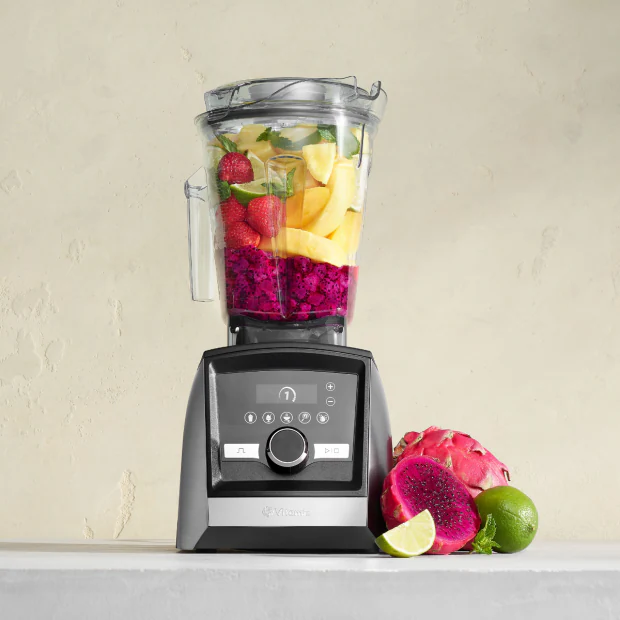
Why You Should Model a KitchenAid Blender
You might be wondering, “Why this specific appliance?” The KitchenAid stand mixer is a masterclass in industrial design. It’s the perfect subject for honing your 3D skills for several key reasons:
- Complex Curvature: That signature curved head is a fantastic exercise in managing good topology. You can’t just slap a few vertices together; you need clean edge flow to get those smooth, elegant highlights.
- Hard-Surface Detailing: From the attachment hub to the speed control lever, the mixer is packed with small, precise details that will push your hard-surface modeling techniques. This is where you master tools like the Bevel and Boolean modifiers.
- Material Variety: You have the glossy, painted metal body, the brushed stainless steel bowl, and the matte plastic components. It’s a perfect playground for practicing your texturing and shading skills in the Shader Editor.
- Portfolio Gold: A photorealistic render of a well-known, complex object like this is an instant portfolio booster. It demonstrates a high level of technical skill and an eye for detail.
The Ultimate KitchenAid Blender Review: A Step-by-Step Modeling Guide
Ready to get your hands dirty? We’ll break this down into a manageable workflow. Don’t worry about getting every detail perfect on the first try; this is all about the process.
Step 1: Gathering High-Quality Reference
This is the most critical step. You cannot model what you cannot see.
- Search for Blueprints: Look for “KitchenAid mixer blueprints” or “orthographic views.” These front, side, and top views are essential for getting the proportions right.
- Collect Detail Shots: Find high-resolution photos of the real product. Zoom in on the logo, the knobs, the power cord, and the mixing attachments. Pay attention to how light interacts with the different materials.
- Set Up Image Planes: In Blender, use
Shift + A> Image > Reference to import your blueprints into the 3D viewport. Set them up on the X, Y, and Z axes to create a guide cage for your model.
Pro Tip: When setting up your reference images, go to the Object Data Properties for the image and enable the “Opacity” checkbox. Lowering the opacity makes it easier to see your model as you work.
Step 2: Blocking Out the Main Forms
We start simple. The goal here is not detail, but proportion and basic shape. We’re building the skeleton of our model.
- Start with Primitives: Begin with a simple cube (
Shift + A> Mesh > Cube). - Shape the Base: In Edit Mode (
Tab), use basic tools like Scale (S), Move (G), and Extrude (E) to match the base of the mixer to your side and front reference images. - Create the Neck and Head: Add another cube or extrude faces from your base to block out the vertical neck and the main motor head. Keep everything low-poly for now. The focus is purely on the overall silhouette.
|
Our Picks for the Best Blender in 2026
As an Amazon Associate, we earn from qualifying purchases.
|
||
| Num | Product | Action |
|---|---|---|
| 1 | Ninja Professional Blender 1000W, Total Crushing Technology- Smoothies, Ice Crushing & Frozen Fruit, Full-Size Countertop Blender, 72-oz. Pitcher, Black & Grey, BL610 |

|
| 2 | BlenderBottle Classic V2 Shaker Bottle Perfect for Protein Shakes and Pre Workout, 28-Ounce, Clear/Black |
|
| 3 | nutribullet Personal Blender, Shakes, Smoothies, Food Prep, and Frozen Blending, 24 Ounces, 600 Watt, Gray, NBR-0601WM |
|
| 4 | BLACK+DECKER PowerCrush Multi-Function Blender with 6-Cup Glass Jar, 4 Speed Settings, Silver |
|
| 5 | Magic Bullet Blender, Small, Silver, 11 Piece Set |
|
| 6 | Ninja Blender, Compact Kitchen System, 1200W, 3 Functions for Smoothies, Dough & Frozen Drinks with Auto-IQ, 72-oz.* Blender Pitcher, 40-oz. Processor Bowl & 18-oz. Single-Serve Cup, Grey, AMZ493BRN |
|
| 7 | KOIOS Smoothie Blender, 900W Personal Blender for Shakes and Smoothies for Kitchen with 2 No-BPA 22oz Portable Cups, Single Serve Smoothies Maker Mixer for Juices, Nutritious Recipe (Grey Blue) |
|
| 8 | BLACK+DECKER 10-Speed Countertop Blender, BL2010BP, 6-Cup Plastic Jar, Dishwasher-Safe, Stainless Steel, Suction Feet |
|
| 9 | Ninja | Blender | Nutri Pro | Single Serve | For Smoothies, Salsa, Shakes and Frozen Drinks | Includes 2 Smoothie Cups & Lids | Crushes Ice, Fruit & Veggies |Silver | BN401 |
|
| 10 | Zulay Kitchen Milk Frother Wand Drink Mixer with AA Duracell Batteries- Durable Handheld Milk Frother Electric Whisk - Easy-Clean Milk Frother Wand & Mini Blender - Electric Coffee Frother - Black |
|
Step 3: Refining the Shape with the Subdivision Surface Modifier
This is where the magic happens. We’ll turn our blocky shapes into those smooth, iconic curves.
- Add the Modifier: Select your main model part and navigate to the Modifier Properties tab. Click “Add Modifier” and choose Subdivision Surface. Immediately, your model will look smoother.
- Add Supporting Edge Loops: Your model will look too rounded, like a blob. We need to tighten the edges. In Edit Mode, use the Loop Cut tool (
Ctrl + R) to add edge loops close to the edges you want to keep sharp. Slide them into position to control the tightness of the curve. - Work the Topology: This is a bit like 3D sculpting. Use the Move tool (
G) to adjust individual vertices and edges, ensuring your model’s surface flows cleanly and matches the reference images from all angles. Good topology—meaning clean, quad-based geometry—is crucial for avoiding weird shading artifacts later on.
As Alex Chen, a senior product visualization artist, often says, “Good topology isn’t just about looks; it’s about control. Clean edge flow allows you to direct the viewer’s eye with perfect highlights and reflections.”
Step 4: Adding the Finer Details
Once the main body is shaped, it’s time to add the components that bring it to life. This is what separates a good model from a great one.
- The Attachment Hub: Use a Cylinder and the Boolean modifier to cut out the circular port at the front. Use another cylinder for the knob.
- The Speed Lever: Model this as a separate object. A simple cube, extruded and shaped with a Subdivision Surface modifier, works great.
- The Bowl: Start with a UV Sphere. Delete the top half, and in Edit Mode, select the bottom vertex and use Proportional Editing (
O) to flatten it. Extrude the top edge and add a Solidify modifier to give it thickness. - The Logo: For the “KitchenAid” text, you can either use Blender’s Text object or create it from a plane with an alpha texture for maximum realism.
Pro Tips for a Photorealistic KitchenAid Blender Render
Modeling is only half the battle. A truly convincing KitchenAid blender review from a 3D perspective hinges on the final render.
How do you create realistic materials in Blender?
The key is the Principled BSDF shader. For the main body, set the Base Color to that iconic red. Turn the Metallic value up to around 0.5 and lower the Roughness to about 0.1-0.2 for a glossy, painted metal look. For the stainless steel bowl, set Metallic to 1.0 and experiment with a moderate Roughness value (e.g., 0.25). Use a Noise Texture node plugged into the Roughness input to add subtle surface imperfections.
What is the best way to light a product model?
A classic three-point lighting setup is your best friend for studio renders.
- Key Light: The main, brightest light source, positioned to one side to create highlights and define the form.
- Fill Light: A less intense light on the opposite side to fill in the dark shadows and reveal more detail.
- Rim Light: A light placed behind the object to create a bright outline, separating it from the background.
Combine this with an HDRI (High Dynamic Range Image) for realistic global illumination and reflections. You can find free HDRIs on sites like Poly Haven.
Should I use Cycles or Eevee for the final render?
This depends on your goal.
| Feature | Cycles | Eevee |
|---|---|---|
| Method | Path Tracing (Ray Tracing) | Rasterization (Real-time) |
| Realism | Photorealistic light bounces, shadows | Very good, but less accurate |
| Speed | Slower | Extremely Fast |
| Best For | Final high-quality renders | Previews, stylized animation |
For a final, portfolio-worthy render of your KitchenAid blender, Cycles is the undisputed winner. Its physically accurate light simulation will capture those subtle reflections and soft shadows that sell the realism.
Common Mistakes to Avoid
- Bad Topology: Avoid N-gons (faces with more than four vertices) on curved surfaces. They cause pinching and shading errors with the Subdivision Surface modifier.
- Overly Sharp Edges: In the real world, no edge is perfectly sharp. Always add a small Bevel (
Ctrl + B) to your edges to catch the light and make your model look more realistic. - Uniform Materials: Nothing is perfectly clean or uniform. Add subtle grunge, fingerprints, or scratches using texture maps in the Shader Editor to break up the perfect CG look.
Frequently Asked Questions (FAQ)
Q: What is the hardest part of modeling a KitchenAid blender?
A: The most challenging part is typically achieving a clean, smooth topology on the main curved head of the mixer. It requires careful placement of edge loops to control the curvature without creating pinching or artifacts.
Q: How long does it take to model a realistic KitchenAid blender?
A: For an intermediate Blender user, the modeling process could take anywhere from 8 to 15 hours. Texturing, lighting, and rendering would add several more hours to achieve a final, polished result.
Q: Can I model this as a beginner in Blender?
A: Absolutely! While challenging, it’s an excellent learning project. Take it one step at a time, starting with the blockout and focusing on mastering one tool at a time, like the Subdivision Surface modifier.
Q: Is it better to use Booleans or manual modeling for details?
A: A combination of both is ideal. Booleans are great for quickly cutting out complex shapes like vents or ports, but they can create messy topology. It’s often necessary to manually clean up the geometry after applying a Boolean modifier.
Q: How do I make the metal materials look convincing?
A: The key is in the roughness and reflections. Use a high metallic value in the Principled BSDF shader and plug a subtle imperfection texture (like a fingerprint or smudge map) into the Roughness input. This breaks up the perfect reflection and adds a layer of realism.
Conclusion: The Final Verdict
So, what’s the verdict on our 3D KitchenAid blender review? This appliance is an A+ subject for any 3D artist. It challenges you, teaches you fundamental principles of hard-surface modeling, and leaves you with a stunning piece for your portfolio. The journey from a default cube to a photorealistic render of this design icon is incredibly rewarding. It forces you to master topology, lighting, and texturing in a way that simpler models just can’t.
Now it’s your turn. Take what you’ve learned here, find your reference images, and start your own project. Don’t be afraid to fail and try again. Every model you create is another step forward in your 3D journey. Share your final renders online; we’d love to see them! This project is our ultimate KitchenAid blender review from a creator’s perspective, and we hope it inspires you to build something beautiful.